
A pumice stone that remains damp in a corner of the shower after each use loses its roughness in a few weeks. The pores become clogged, bacteria settle in, and you end up scrubbing with a smooth stone that no longer removes anything. To extend the lifespan of this tool, cleaning is as important as how to use it.
Clogged pumice stone: what happens in the pores
The surface of a pumice stone is riddled with micro-cavities formed by volcanic gases trapped during the cooling of lava. When exfoliating the skin of the feet, dead skin cells, sebum, and soapy water clog these cavities.
Over time, the stone feels smoother to the touch. We think it is wearing down, while it is simply clogged. Appropriate cleaning often suffices to restore its original grain.
The real problem arises when residual moisture promotes bacterial proliferation. A pumice stone stored in a wet soap dish or placed at the bottom of the bathtub remains in a permanently damp environment. Mold can appear in the pores, sometimes without being visible to the naked eye. At this stage, there is a risk of applying a non-hygienic tool to the skin.
Before trying to properly clean a pumice stone, it is worthwhile to understand this clogging mechanism: the cleaning action targets the organic residues lodged in the porosity, not the external surface.
Cleaning the pumice stone after each use
A quick rinse under the tap is not enough. Water removes surface residues but leaves dead skin compacted in the pores. Better results can be achieved with a simple protocol that takes less than two minutes.
Brushing with soap under running water
After each use, scrub the stone with a stiff brush and a little soap (Marseille soap, liquid black soap, or a neutral pH cleaner). The bristles dislodge residues that water alone cannot remove. Then rinse thoroughly.
Air drying outside the bathroom
This is the step that most people neglect. Complete drying in a ventilated area prevents mold and bacteria from settling in. Placing the stone on a windowsill or on an airy shelf works well. Avoid closed cabinets and soap dishes that sit in stagnant water.
Feedback varies on the drying time needed, but generally, a night in the open air in a dry room is enough for the stone to be ready for use again.
Deep disinfection of the pumice stone
Daily brushing maintains the stone, but does not disinfect it. At regular intervals, a more thorough cleaning is necessary, especially if the stone is used by multiple people or has been stored in a prolonged damp environment.
Soaking in a baking soda solution
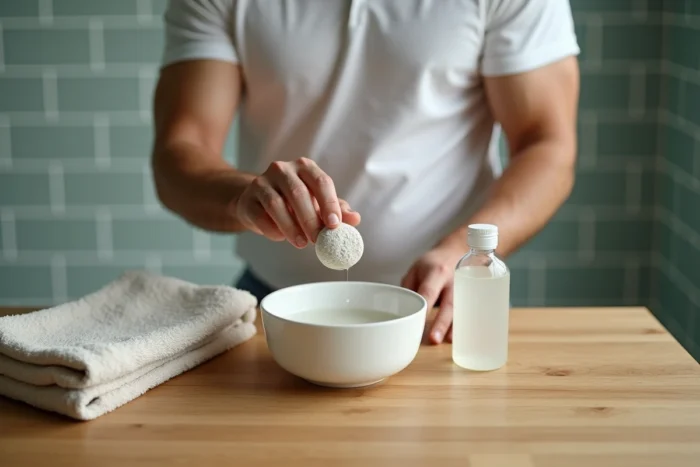
Submerge the stone in a container of hot water mixed with two tablespoons of baking soda. The heat expands the pores while the baking soda loosens the embedded organic residues. Soaking for about fifteen minutes, followed by brushing, restores a grainy texture to the stone that is noticeable to the touch.
Diluted bleach: occasional use
Some mainstream sources mention sterilization with bleach. This method works, but it does not need to be systematic. It is reserved for situations where the stone emits an odor, has suspicious dark stains, or has been forgotten for several days in a damp environment. A light dilution in cold water and a short contact time prevent damage to the porous structure.
- Careful rinsing after each disinfecting soak to remove any product residue
- Complete drying before the next use, ideally in a ventilated space
- Regular visual inspection: if black spots or an odor persist after cleaning, the stone should be replaced
When to replace a worn pumice stone
You can clean, disinfect, and brush a pumice stone as much as you want: when it loses its roughness, it no longer serves its purpose. A stone that has become smooth to the touch, even after a complete soak and vigorous brushing, has simply reached the end of its life.
Rather than forcing by pressing harder on the skin (which causes irritation and micro-lesions), it should be replaced. Natural and synthetic pumice stones do not have the same durability. Natural models, carved from volcanic rock, generally retain their grain longer than molded synthetic versions.
- Smooth surface even after cleaning: the stone is worn, not clogged
- Pieces that detach or visible cracks: the structure is weakened
- Persistent odor despite disinfection: bacteria have colonized the pores deeply
- Stone has become crumbly to the touch: it may leave particles on the skin
Usage gestures that protect the pumice stone
Maintaining the stone begins during the exfoliation itself. Scrubbing on skin previously softened by a warm bath reduces the necessary pressure and limits mechanical wear on the abrasive surface. On dry skin, more pressure is applied, which crushes the micro-cavities and accelerates the loss of roughness.
Gentle circular motions, without excessive pressure, protect both the skin and the stone. Work in short zones, rinsing the stone regularly to clear residues as you go.
Storing the stone in a suspended mesh bag or a small perforated basket rather than on a damp flat surface makes a noticeable difference in its longevity. Air circulates around the stone, and drying starts immediately after the shower.
The last point to remember can be summed up in one sentence: good drying after each use is better than late disinfection. Most mold and effectiveness loss issues stem from damp storage, not a lack of cleaning product.