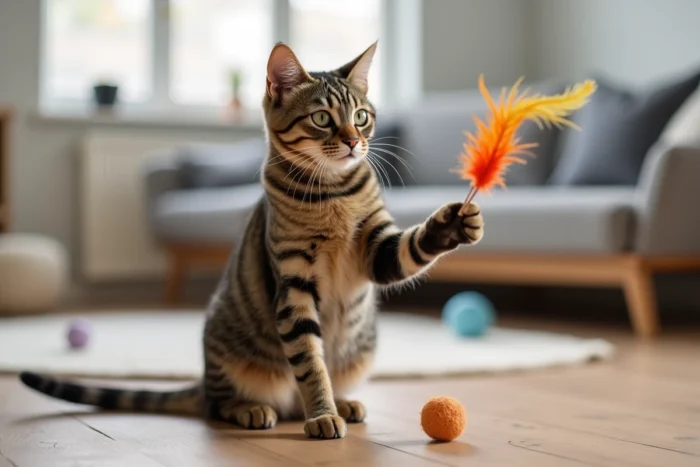
A cat toy is not just an object placed on the floor. The choice of the toy, how it is used, and the frequency of play sessions directly determine the level of stress, energy expenditure, and the quality of the relationship between the feline and its owner. Understanding these mechanisms changes the way we approach daily life with both indoor and outdoor cats.
Shared play between cat and human: an underestimated lever for well-being
The majority of toys sold in pet stores are designed to occupy the cat alone: balls, closed circuits, mechanical mice. These objects have their utility, but they only cover part of the feline’s needs.
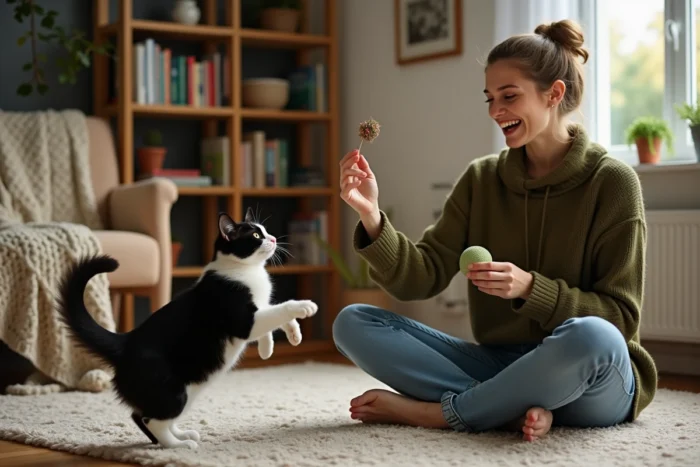
Behaviorists and veterinarians now emphasize the importance of games that directly involve the owner. Feather wands, hide-and-seek with treats, chase games in a hallway: these interactions replicate the natural hunting sequence (spotting, tracking, capturing) while strengthening the bond with the human.
The benefit goes beyond mere amusement. A cat that regularly shares play sessions with its owner exhibits fewer destructive behaviors related to boredom. Stress decreases, and confidence increases. This aspect of shared play as a factor of feline well-being is increasingly emphasized in the recommendations of animal health professionals.
For those who want to understand everything about Aplouf.com, the platform specifically addresses this relational approach to feline play within its community.
Laser games for cats: why frustration lurks
The laser pointer is one of the most popular accessories. The cat jumps, sprints, changes direction. The spectacle is entertaining. The problem arises after the session.
A cat chasing a light spot can never catch its prey. The hunting sequence remains incomplete: there is neither capture nor physical reward. Over time, this lack of conclusion can lead to frustration and anxiety in the cat, especially if the laser is the only form of stimulation.
The best practice, now recommended by specialized guides, is to always end the session by directing the point towards a physical toy or a treat that the cat can catch. This way, the feline concludes its chase with a real catch, closing the behavioral cycle.
Concrete alternatives to the laser
- The feather wand remains the most comprehensive interactive toy: it engages sight, hearing, and allows for a real catch at the end of the session
- Treat-dispensing toys combine mental stimulation and food rewards, extending the cat’s interest without generating frustration
- Hide-and-seek with a toy hidden under a cloth or behind a piece of furniture replicates natural tracking and engages the owner in the game
Online feline community: what distinguishes a specialized space
General social networks are overflowing with content about cats. The problem lies in the nature of this content. Algorithms favor highly engaging videos, including those where a cat finds itself in a staged stressful situation for entertainment.
A space dedicated to cat enthusiasts operates on a different logic. Moderation targets animal welfare rather than virality. Discussions focus on concrete issues: choosing toys suitable for the cat’s age, managing a fearful feline, sharing experiences about accessories.
This specialization also helps filter out dangerous advice circulating on mainstream platforms. A forum or community dedicated to cats brings together experienced owners and sometimes animal behavior professionals, raising the quality of responses.
Criteria for evaluating an online feline community
- The moderation charter explicitly mentions respect for animal welfare and prohibits content putting a cat in a stressful situation
- Technical discussions about health, nutrition, or behavior are separated from humorous content
- Members share factual feedback on products and toys, not just photos
- The space does not rely on an advertising model that directs content towards partner brands
Choosing a toy for a cat based on its behavioral profile
Not all cats play the same way. A four-month-old kitten and a sedentary adult cat have neither the same physical capabilities nor the same stimulation needs.
A young, active cat needs short but intense sessions, with toys that move quickly and unpredictably. The feather wand and bouncy balls are well-suited to this profile. For an older or less mobile cat, slow-rolling floor toys or food puzzles are more appropriate, as they stimulate thinking without requiring repeated jumps.
Fearful cats particularly benefit from shared games at a gradual distance. Start with a toy at the end of a long string, without direct contact, then reduce the distance over sessions. This patient protocol builds trust better than any autonomous toy.
One last point deserves attention: rotating toys maintains the cat’s interest. Rather than leaving all toys freely accessible at all times, removing some items for a few days and then reintroducing them is enough to revive curiosity. The feline brain reacts strongly to novelty, even if simulated.
Choosing a game for a cat should be considered an act of care, not an impulse purchase. A well-chosen and well-used toy transforms the daily life of an indoor feline. Specialized communities like Aplouf.com provide a framework where these reflections find their place, away from the noise of generalist platforms.