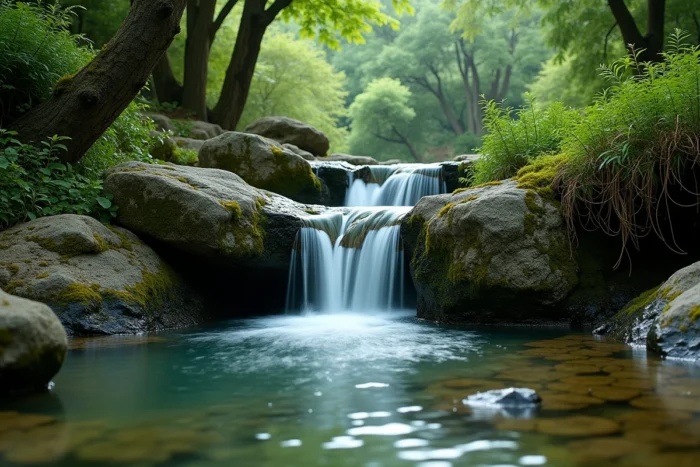
The small cascade of the Lez refers to a natural drop in the coastal river that flows through the metropolis of Montpellier before reaching the Mediterranean. This site, part of a Natura 2000 classified area, attracts walkers looking for a refreshing spot accessible without technical equipment. Reaching this cascade requires knowledge of the accessible routes and the constraints related to environmental protection.
Natura 2000 classification of the Lez and on-site constraints
The Lez benefits from a Natura 2000 classification that strictly regulates human activities along its banks. The source, located in Saint-Clément-de-Rivière, is a protected site for its remarkable fauna and flora. Swimming is only “tolerated” during the summer season, provided that the fragile environment is respected.
This protection has direct consequences on access to the small cascade. Certain sections of the bank are prohibited from foot traffic to preserve the riparian vegetation (the vegetation that borders the watercourse). Signs indicate areas where passage is limited, and circumventing them may result in a fine.
In practical terms, this means that a route to the small cascade of the Lez cannot be improvised by cutting through the vegetation. Following the marked paths protects both the hiker and the ecosystem.

Access to the small cascade of the Lez from the Lunaret park
The most logical starting point remains the Lunaret zoological park, to the north of Montpellier. Parking is free, and the park entrance provides access to the natural reserve of the Lez below.
Reaching the reserve from the zoo
From the main parking lot of the zoo, a path descends towards the banks of the Lez. The slope is moderate, suitable for sneakers. Following the right bank upstream, the path runs alongside the river on a route shaded by holm oaks and ashes.
The drop of the small cascade appears after a reasonable walk on flat terrain. The total elevation change remains low, making the walk accessible for families with children.
Second access via the Restinclières estate
Another entry point exists via the Restinclières departmental estate, managed by the Hérault Department. This estate has parking and maintained paths that lead to the banks of the Lez from the north.
The Department has built a wooden footbridge at the Lez ford, connecting the estates of Saint-Sauveur and Restinclières via the Passa Meridia path. This development allows for crossing the watercourse without disturbing the aquatic fauna while providing a safe passage for the public.
Preparing for your hike to the cascade of the Lez: what you need to know
The walk to the small cascade does not require specific hiking gear, but a few precautions can prevent unpleasant surprises.
- Wear closed shoes with a non-slip sole: the rocks near the cascade are slippery, especially after rain or during floods
- Bring enough water, as there are no refreshment points on the trail between the parking lot and the cascade
- Plan to carry a bag for your waste: the Natura 2000 site does not have trash bins in the wild sections of the banks
- Avoid the hottest hours in summer, as the vegetation offers partial shade and the path can become stifling in the early afternoon
Swimming in the Lez at the cascade remains a sensitive topic. It is tolerated, not authorized. No surveillance or rescue devices are installed on-site. Currents can vary depending on the seasonal flow of the river.

Remarkable fauna and flora along the route
The Natura 2000 classification of the Lez is not just an administrative formality. The river is home to endemic species and specific habitats that the natural reserve seeks to preserve.
The riparian vegetation bordering the path constitutes an ecological corridor connecting the garrigues of northern Montpellier to the coastline. One can observe grey herons, kingfishers, and, in the water, protected fish species. The source of the Lez in Saint-Clément-de-Rivière is itself a unique ecosystem, fed by an underground karst network.
At the level of the small cascade, the limestone creates natural basins where aquatic vegetation thrives. This micro-habitat is particularly vulnerable to foot traffic. Staying on marked paths and not moving stones in the riverbed are simple actions that make a difference.
The role of the Lez in the drinking water supply of Montpellier
The Lez is not just a place for walking. This coastal river supplies drinking water to a large part of the Montpellier metropolis. Its karstic source provides a regular flow used for the city’s water supply.
This strategic function partly explains the strict regulations along its banks. Any pollution, even minor (sunscreen, food waste, bank trampling), has a potential impact on the water quality downstream. The site of the small cascade is located in the upstream area, where the sensitivity of the watercourse is the highest.
Hiking to the small cascade of the Lez, therefore, means traversing a space that combines three functions: ecological corridor, drinking water resource, and recreational site. The balance between these uses relies on the behavior of each visitor, and the footbridge at the Lez ford exemplifies this desire to reconcile public access and environmental protection.